
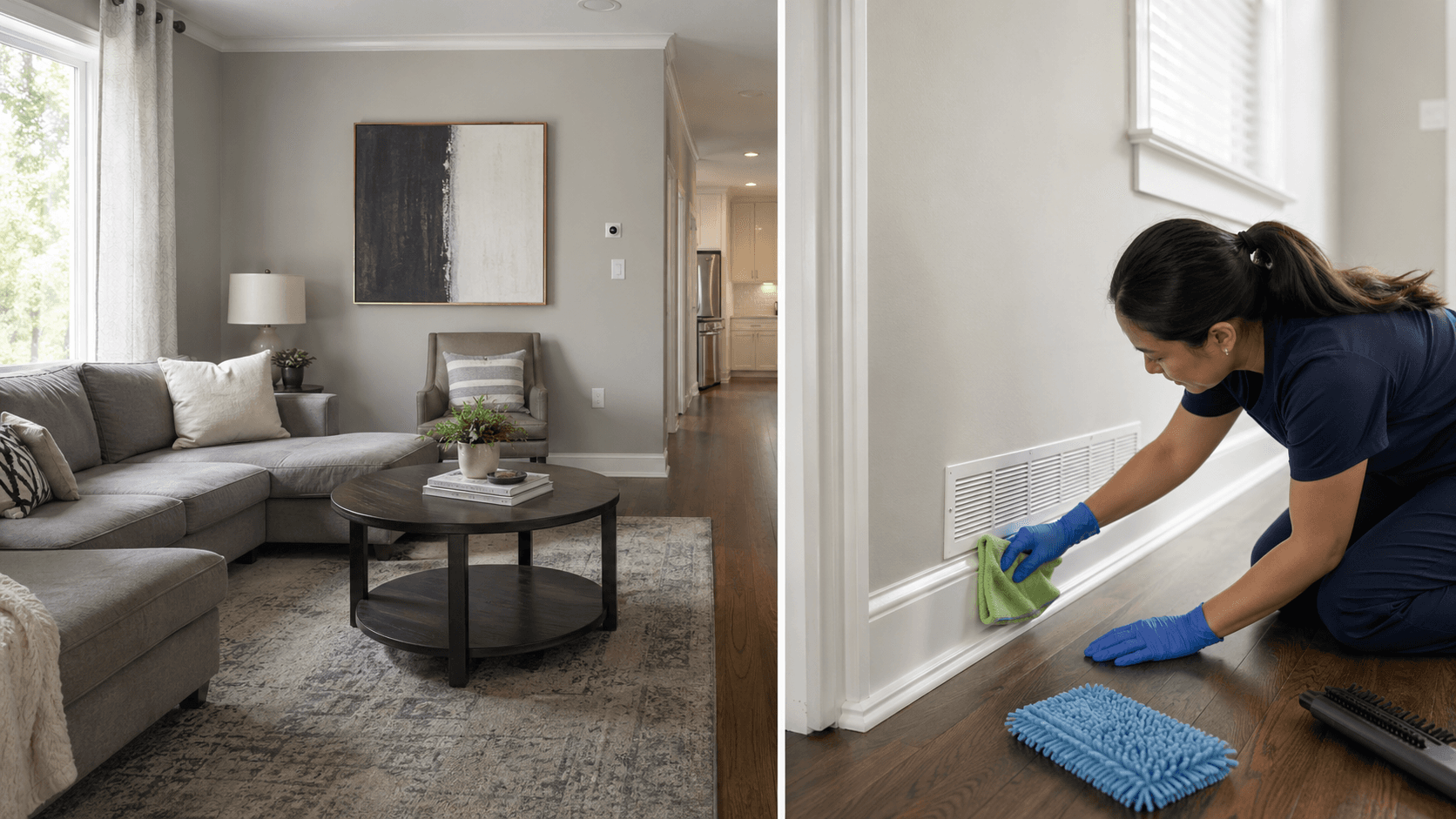
Standard cleaning keeps pace
Standard cleaning is a maintenance routine designed to preserve an already acceptable baseline. It focuses on predictable visible tasks such as dusting reachable surfaces, vacuuming traffic lanes, mopping, kitchen wipe-downs, and bathroom sanitation. The goal is stability. If service is performed consistently, small messes do not accumulate into larger recovery work. Standard cleaning is therefore about control of drift, not major condition change.
Deep cleaning resets baseline condition
Deep cleaning is a reset service. It includes detailed work that recurring maintenance often does not fully cover, such as baseboards, vent covers, window tracks, behind movable furniture, inside appliances, and dense bathroom mineral buildup. It is labor-intensive because it addresses accumulated residue rather than daily touch-up. Most households benefit from a deep reset before starting recurring maintenance schedules.
Room-by-room scope differences
In kitchens, standard service usually covers counters, exterior cabinet faces, appliance exteriors, sink sanitation, and floor care. Deep service adds interior appliance cleaning, degreasing in hidden edges, and detailed attention around handles and trim lines. In bathrooms, standard service handles core sanitation while deep service expands into grout detail, scale removal, and full fixture edge restoration. In living areas, deep service targets neglected surfaces, vents, and trim.
Bedrooms and circulation zones
Standard bedroom service includes dusting accessible surfaces, bed-area vacuuming, and floor care. Deep service extends to baseboards, closet edges, under-bed areas where reachable, and buildup on less-touched surfaces. Hallways and stairs in standard plans receive general vacuuming and wipe-downs. Deep plans expand detail around railings, corners, and areas that collect long-term dust. The difference is not one or two tasks. It is depth and finish quality.
Frequency changes the right choice
Service frequency is the strongest predictor of which clean you need. Weekly and bi-weekly households can usually maintain condition with standard cleaning after a reset. Monthly or intermittent service tends to require periodic deep cycles because soil accumulation outruns maintenance pace. Homes with children, pets, or high guest traffic may also need more frequent deep intervals despite regular standard visits.
Seasonal logic in the GTA
Seasonality matters. Winter increases indoor residue from salt, slush, and heavy footwear traffic. Spring often requires deeper dust and allergen control. Summer can increase humidity-related buildup in bathrooms. Fall is often used for pre-holiday reset. Many GTA households run a pattern of one deep clean each season plus recurring standard service between cycles. This model balances cost and condition without waiting for visible decline.
Pricing differences explained
Standard cleaning pricing reflects predictable recurring duration and stable scope. Deep cleaning pricing reflects additional labor time, higher detail density, and sometimes specialized products or tools. The added cost is tied to effort and condition recovery, not marketing labels. If a provider quotes deep and standard service at nearly identical rates, verify scope definitions carefully because one of the scopes is likely under-specified.
How to decide quickly
Use a simple decision rule. If your home currently feels manageable and no zones have persistent buildup, standard cleaning is likely enough. If you notice recurring grime in edges, fixtures, appliance interiors, or floor details, deep cleaning is the better starting point. If you are preparing for an event such as listing, move-in, move-out, or post-renovation handoff, start with deep by default.
Onboarding sequence that works
The most reliable onboarding sequence is deep first, recurring standard second. Deep cleaning sets a documented baseline so future maintenance can be measured against known condition. Without that reset, recurring plans often spend weeks catching up and clients experience inconsistent outcomes. A defined baseline also helps avoid confusion about whether a missed result is a quality issue or pre-existing buildup outside a maintenance scope.
Common mistakes to avoid
One frequent mistake is booking standard service for a home that has not had professional attention for months. Another is assuming "one-time deep clean" permanently solves condition without recurring upkeep. A third is not clarifying exclusions such as inside ovens or interior windows. The safest approach is written scope confirmation before service begins, especially when comparing multiple providers.
Practical recommendation
Choose standard cleaning to maintain control. Choose deep cleaning to recover control. When in doubt, request a scope review and ask the provider to classify each room as maintenance or reset. That conversation usually reveals the right service mix quickly. A clear plan reduces surprises, supports fair pricing, and keeps expectations aligned across every visit.