
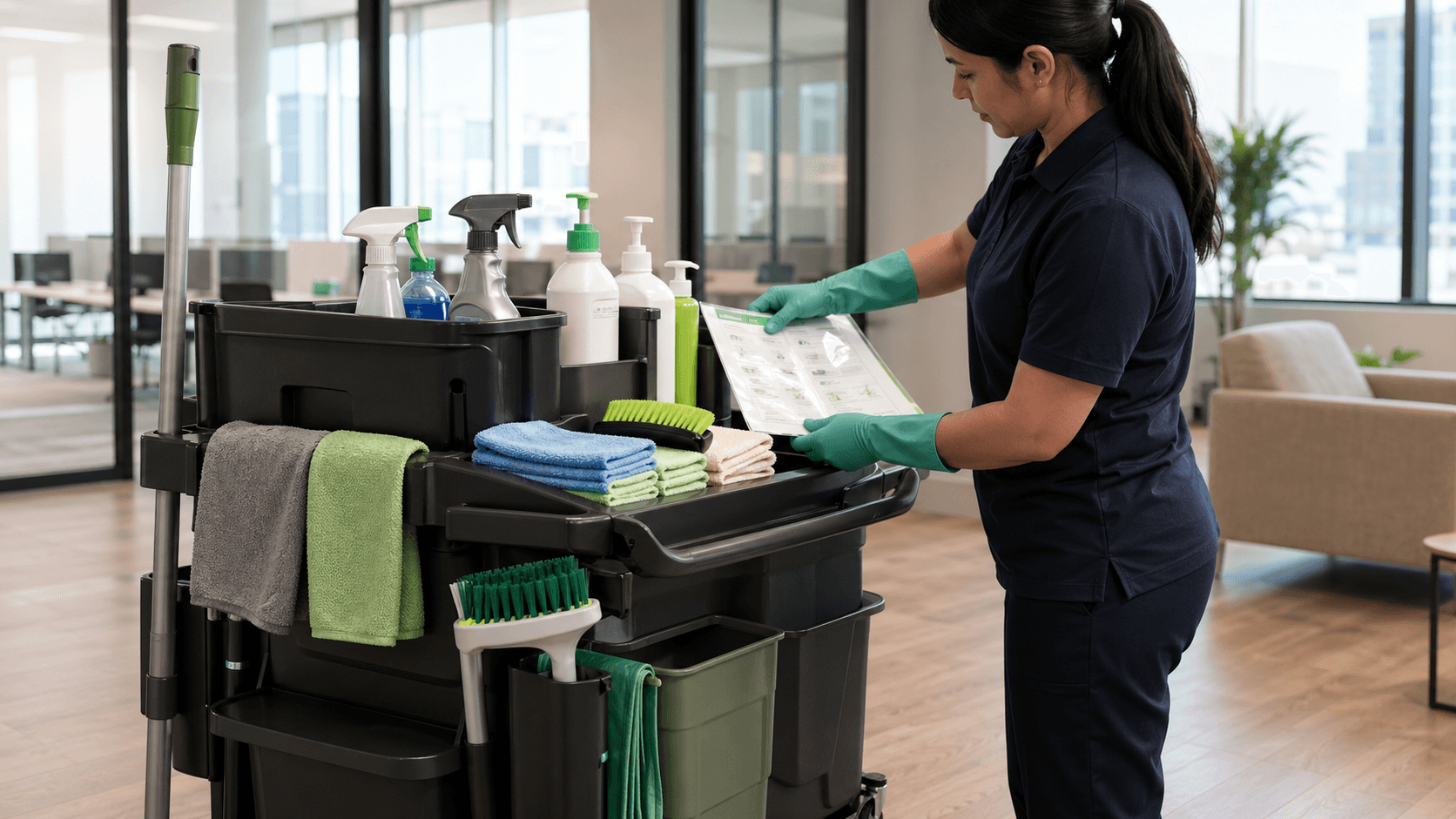
Certification language to verify
The word "eco-friendly" is useful only when it points to verifiable standards. Terms like green, natural, or non-toxic are marketing language unless paired with product-level certification or transparent ingredient documentation. Ask for exact product names, not category claims. Then verify whether those products carry recognized marks such as Ecologo or Green Seal where applicable.
Product claim vs operating reality
A certified product can still be used in a way that reduces safety or effectiveness. Incorrect dilution, short dwell time, and over-application can all create avoidable exposure or residue. Evaluation should therefore include both product credentials and usage method. Ask providers how they train teams on dilution control, contact time, and rinse protocols for each surface category.
What WHMIS contributes
WHMIS is not a marketing label. It is an operational safety framework for handling, labeling, storage, and communication of hazardous products. A professional cleaning provider should understand WHMIS requirements and be able to produce Safety Data Sheets for products used in your facility. If SDS access is difficult or inconsistent, transparency claims are weak.
Ingredient transparency expectations
Request ingredient-level disclosure for products used in high-contact zones. You do not need a chemistry degree to ask basic questions. Ask whether volatile fragrance compounds are present. Ask whether products are suitable for food-adjacent areas, child-occupied spaces, or clinical environments. Providers that cannot answer should not be describing their approach as advanced or responsible.
Why fragrance-free often matters
Fragrance is commonly treated as a customer experience feature, but in many environments it is a risk variable. Schools, clinics, and shared workplaces often include occupants with sensitivities. Fragrance-free programs reduce complaint volume and support healthier indoor environments. In these settings, low-residue and low-odor outcomes are usually better indicators of quality than strong scent perception.
Green cleaning and hygiene
A common misconception is that environmental considerations conflict with strict hygiene requirements. In practice, the right approach is fit-for-purpose product selection by zone. Some high-traffic environments require heavy-duty cleaning for safety. Others can use lower-impact chemistry for routine maintenance. A strong provider explains where each approach applies rather than offering one universal product story.
Questions to ask before signing
Ask for a written product list by area type. Ask which products are certified and which are selected for compliance reasons. Ask how dilution is measured and documented. Ask how microfiber tools are laundered and cross-contamination is prevented. Ask whether staff receive recurring training. These questions reveal whether "green" is a real operating system or only a sales adjective.
Common greenwashing patterns
Watch for broad claims without product names, refusal to share SDS documentation, and inconsistent explanations from different team members. Another warning sign is language that implies all chemicals are equally safe if used "carefully." Serious providers discuss tradeoffs honestly and specify where stronger chemistry is required for public health or regulatory reasons.
Indoor air quality connection
Cleaning choices can materially affect indoor air quality through residues, aerosols, and fragrance load. Product selection, dilution, and ventilation during application all matter. For offices and schools, IAQ outcomes influence comfort, absenteeism perception, and complaint patterns. If IAQ is important to your organization, ask for cleaning protocols that explicitly include low-residue and airflow-aware methods.
Practical evaluation framework
Use a simple scorecard: product transparency, certification evidence, WHMIS competence, fragrance strategy, and method discipline. A provider does not need to score perfectly in every category, but gaps should be openly acknowledged with mitigation plans. Structured transparency is more valuable than perfection claims because it allows ongoing improvement and informed decision-making.
Bottom line
Eco-friendly cleaning should be treated as a measurable operating standard, not a slogan. Verify certifications, inspect product and method transparency, and ensure usage practices fit your environment. The best partners communicate clearly about tradeoffs and can show how their choices protect both hygiene outcomes and occupant health.