
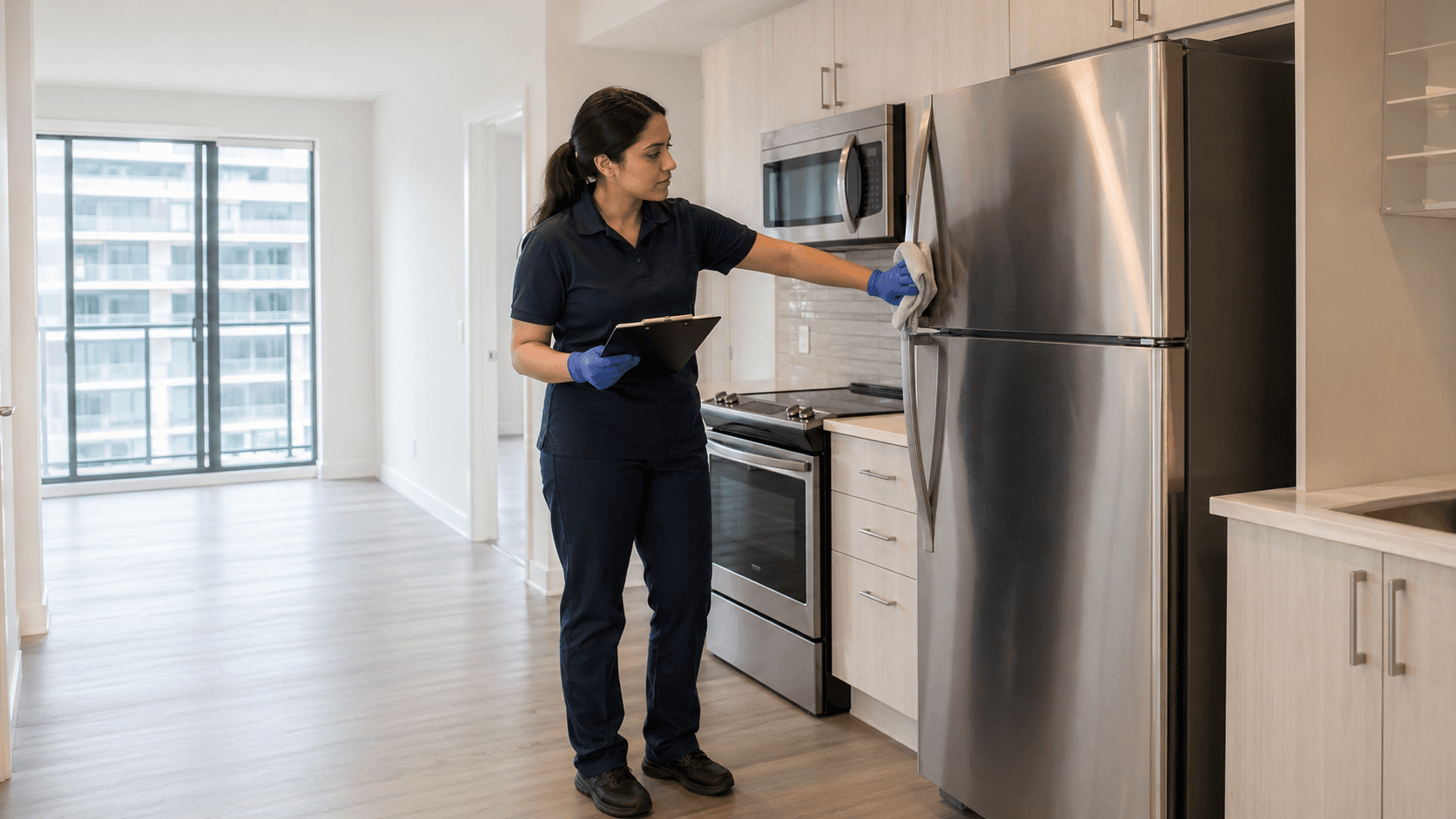
Why move-out cleaning is different
Move-out cleaning is judged by handover expectations, not normal lived-in standards. Landlords, property managers, and buyers inspect details that routine household cleaning often overlooks. Appliance interiors, cabinet edges, closet floors, fixture scaling, and wall-adjacent dust all become high-importance items. The standard is usually binary: either the property appears possession-ready or it does not. That is why move-out work requires explicit scope and sequencing.
What landlords usually inspect first
In most GTA rentals, inspection starts in kitchens and bathrooms, then expands to floors, trim, windows, and storage spaces. Landlords often check oven and fridge condition, sink and tap scaling, toilet and shower finish quality, and visible residue around baseboards. They also notice odors, garbage traces, and overlooked corners. Even small misses can influence deposit conversations when the property is otherwise clean.
Checklist discipline prevents disputes
A written checklist is the most practical control tool in move-out cleaning. Without it, expectations remain subjective and disagreements become likely. A proper checklist defines each room, each fixture, and each included task. It also clarifies exclusions. If interior windows, wall washing, or carpet extraction are not included, that should be explicit before service starts. Documentation reduces ambiguity at the exact moment ambiguity becomes expensive.
Timing around possession dates
Schedule service after movers and repair work are complete, but before final inspection or key handoff. If cleaning happens too early, later activity reintroduces dust and scuffs. If cleaning happens too late, there is no buffer for touch-ups. A practical sequence is: remove contents, complete minor repairs, run move-out clean, complete walkthrough, then hand over keys. This sequence protects results and reduces last-day stress.
Preparing the property correctly
Preparation affects service quality more than most tenants expect. Empty all cabinets and appliances, remove personal items, and confirm that water and power are available. Provide access instructions, parking details, and elevator booking information when applicable. If the building has loading or access restrictions, communicate them in advance. When teams lose time solving access problems, that time is taken from cleaning detail.
Scope areas often forgotten
Commonly missed items include inside the dishwasher filter area, behind toilet bases, inside bathroom exhaust covers, closet shelf surfaces, and residue near door frames. Balcony doors and entry thresholds are also frequent misses, especially during winter when salt tracks in. Asking your provider to call out these risk areas in writing before service can prevent avoidable inspection feedback.
Photo documentation and evidence
Photo documentation does not replace quality, but it protects clarity. Time-stamped images of key zones can help if inspection feedback appears days later. Useful evidence includes appliance interiors, bathrooms, floor finish in primary rooms, and emptied storage spaces. Keep photos focused on condition, not decorative angles. Clear evidence helps both tenant and provider resolve disputes quickly and professionally.
Managing deposit risk realistically
A move-out clean can improve your position in deposit discussions, but it does not guarantee outcomes if there are maintenance damages or lease violations unrelated to cleanliness. Keep expectations realistic. Cleaning evidence supports your case on condition, not on unrelated charges. If possible, align checklist language with lease wording so both parties are using the same operational standard during review.
Working with property managers
If your building uses third-party management, ask whether they have a preferred turnover checklist or inspection rubric. Matching that format can reduce interpretation gaps. Some managers care deeply about specific items such as oven interior or shower grout condition. Knowing these priorities in advance lets you allocate effort where it matters most for acceptance.
Day-of-service quality control
Reserve a short walkthrough window after cleaning and before handoff. This allows quick correction if something is missed. A final quality pass is especially helpful in larger homes where visual consistency can hide isolated issues. Catching a missed cabinet shelf before inspection is far easier than negotiating after keys are returned.
Final recommendation
Treat move-out cleaning as a handover project, not a routine clean. Use a written scope, schedule it at the right point in your move timeline, prepare access properly, and keep evidence of final condition. That combination reduces dispute risk, improves handover confidence, and increases the chance of a smooth closeout with landlord or buyer.