
1) Repeated staff complaints
If the same complaints show up every week, your current setup is reactive, not managed. Common examples include washrooms deteriorating by midday, kitchen counters left sticky after evening service, or meeting rooms showing dust before client visits. Repetition matters more than severity. One issue can happen once. The same issue across multiple weeks means there is no closed-loop quality control.
2) Visible client-facing drift
Reception and boardroom standards are part of your brand. Smudged glass, dull floors, and neglected entry zones create negative impressions before conversations even begin. In competitive Toronto markets, presentation quality affects trust quickly. If client-facing condition depends on emergency touch-ups from internal staff, your cleaning model is underperforming and masking true operating cost.
3) Health and hygiene pressure is increasing
Employee expectations changed permanently after COVID-era hygiene shifts. Teams now expect reliable high-touch sanitation in shared spaces, not occasional deep disinfection after complaints. If your office cannot maintain predictable hygiene in washrooms, kitchens, and high-contact surfaces, morale and confidence drop. This is an operational issue, not a cosmetic issue.
4) Internal management time is growing
When office managers spend weekly time chasing cleaning fixes, your vendor has transferred coordination labor back to you. That labor is rarely budgeted, but it is real cost. Logging complaints, sending reminders, verifying re-cleans, and escalating no-shows can easily consume several hours per week. A professional program should reduce this burden, not normalize it.
5) No documentation means no accountability
If service quality cannot be measured, it cannot be improved. Programs without written scope, checklist evidence, and supervisor sign-off rely on memory and goodwill. That model fails under staffing changes or schedule pressure. Documentation does not need to be complicated, but it must exist and be consistent. Otherwise disputes become subjective and recurring.
Additional signal: frequent staff turnover on-site
High provider turnover often produces quality variability, especially when onboarding is weak. If new team members appear constantly without clear supervisor continuity, standards drift quickly. Ask your provider how they preserve service knowledge during staffing changes. If there is no documented transition method, inconsistency is likely to continue.
Additional signal: schedule mismatch with office usage
Many offices inherit cleaning schedules that no longer match occupancy patterns. Hybrid work, extended hours, or increased common-area use can invalidate old assumptions. If Monday mornings consistently look worse than midweek, or if washrooms fail during peak occupancy windows, your schedule design is outdated. A professional program recalibrates frequency by actual usage, not legacy habits.
What a professional program adds
A structured program introduces four essentials: defined scope by zone, frequency matched to traffic, supervision ownership, and transparent reporting. It also defines escalation workflows so issues are resolved quickly and permanently. The goal is predictable performance with fewer surprises, not just more cleaning tasks. Better structure usually outperforms simply adding labor hours.
Program cost vs inconsistency cost
Teams often compare program pricing to current invoice totals without including hidden costs of inconsistency. Include time spent by managers, image risk in client-facing spaces, and repeated disruptions to staff. In many offices, inconsistency cost already exceeds the premium for structured service. A program can therefore reduce total cost while improving outcomes.
How to scope your next step
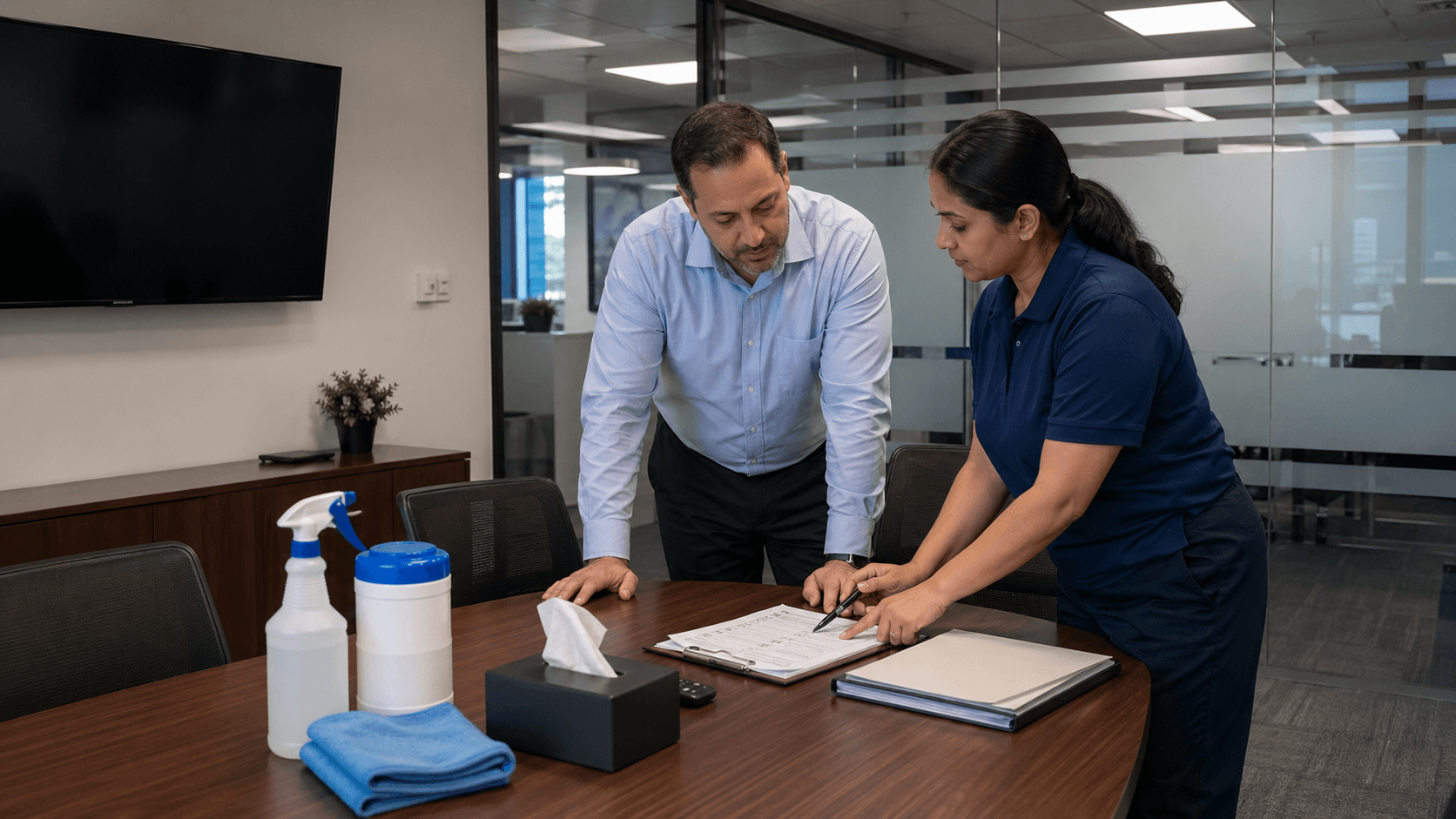
Start with a walkthrough and ask for a written scope that maps each zone, frequency, and quality standard. Require sample reporting and define response timelines for service issues. Ask who your accountable supervisor is and how handoff works during absences. These basics turn cleaning from a recurring problem into a controlled operations function.
Bottom line
If your office shows several of these signals, ad-hoc cleaning is no longer fit for purpose. A professional program is not about adding polish. It is about operational reliability, reduced oversight load, and maintaining workplace standards your staff and clients can trust every week.